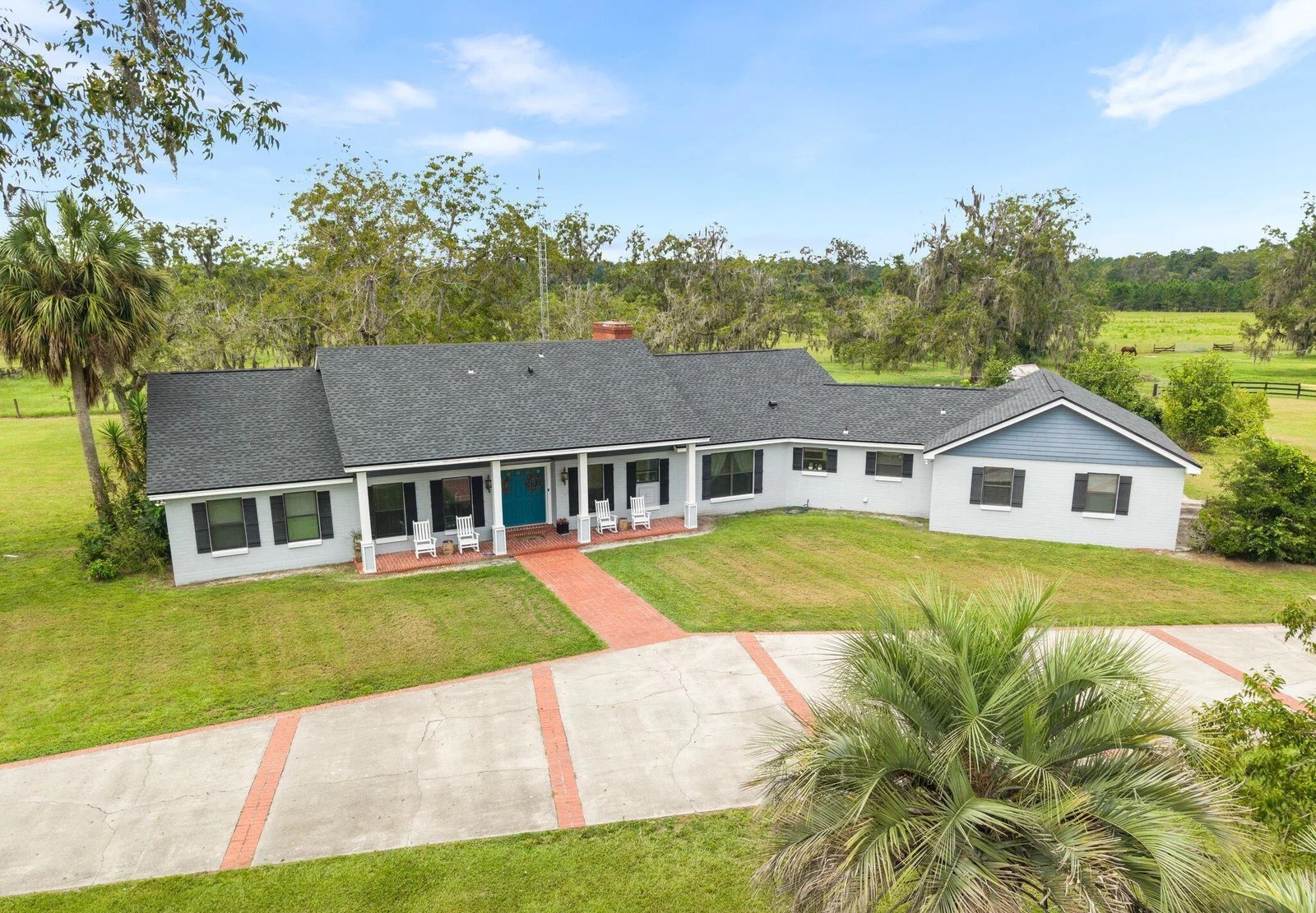
Dreaming of a home with a few acres, more privacy, and room to enjoy the outdoors? Before you buy property with land in Florida, there are some important things you need to know.
For many homebuyers, the appeal of owning acreage is easy to understand. More space between neighbors, room for gardening, outdoor entertaining, workshops, and the possibility of creating your own private retreat.
And in North Florida, that dream can become a reality.
From rural homes in Keystone Heights and Melrose to acreage properties in Hawthorne, Starke, Gainesville, and surrounding communities, buyers can find everything from modest homes on one or two acres to expansive agricultural and equestrian estates.
But purchasing a home with land is different from buying a house in a traditional neighborhood.
Not all acreage is usable. Not all rural properties allow the same activities. And what looks like the perfect piece of land could come with restrictions or unexpected expenses.
Before you fall in love with a property, here are 10 important things to check when buying a home with acreage in Florida.
1. Check the Zoning and What You're Actually Allowed to Do
One of the first things to investigate when purchasing acreage is the property's zoning.
Just because a listing says a property has five acres doesn't automatically mean you can build another home, keep livestock, operate a business, or divide the land.
Zoning regulations determine which uses may be permitted, and those rules vary by county and municipality.
For example, land zoned agricultural in Bradford County may have different requirements than agricultural property in Alachua, Clay, or Putnam County.
Before purchasing, determine whether your plans are allowed.
Questions to Ask:
-
Can you keep horses, chickens, goats, or other livestock?
-
Can you build a barn, workshop, or detached garage?
-
Are manufactured homes permitted?
-
Can you add a guesthouse or accessory dwelling unit?
-
Is the property eligible for subdivision?
-
Are home-based businesses allowed?
Also check for deed restrictions, homeowners association rules, and other recorded limitations that may apply even when zoning permits a particular use.
Buyer Tip: Contact the local planning and zoning department directly. Ask about the property's current zoning designation and whether your intended use requires additional approvals.
2. Verify the Property Boundaries With a Survey
When you're buying a home in a subdivision, property boundaries are often relatively easy to identify.
With acreage, things can become more complicated.
Fences, tree lines, driveways, and cleared areas don't necessarily follow the legal property boundaries.
A seller may have used a section of neighboring land for years without realizing it, or a fence may sit several feet inside the actual property line.
A current boundary survey can help identify:
-
The property's legal boundaries.
-
Existing structures and their locations.
-
Possible encroachments.
-
Certain easements shown in the survey records.
-
Access points and boundary markers.
If you're planning to install fencing, build additional structures, or divide the land, accurate boundary information is especially important.
Buyer Tip: Don't assume the acreage advertised in a listing matches the amount of land you can physically use. Review the legal description, survey, and any relevant recorded documents.
3. Investigate Flood Zones, Wetlands, and Usable Acreage
One of the biggest mistakes acreage buyers can make is assuming that every acre is suitable for building, clearing, or agricultural use.
A property may contain five acres on paper, but portions could be wetlands, flood-prone areas, drainage features, or land subject to environmental restrictions.
This doesn't necessarily make the property undesirable. Wetlands and natural areas can offer privacy, wildlife habitat, and beautiful scenery.
However, they may limit what you're allowed to do with the land.
What Should You Check?
Flood Zones: Review FEMA flood maps to understand the property's mapped flood risk. Remember that flooding can occur outside designated high-risk zones.
Wetlands: Determine whether wetlands are present and whether your plans would require environmental permits.
Usable Acreage: Identify how much of the property is suitable for your intended activities.
Drainage: Look for standing water, erosion, or areas that remain saturated after heavy rain.
Buyer Tip: Use the FEMA Flood Map Service Center as a starting point. For wetlands or proposed land alterations, consult the appropriate environmental agencies and qualified professionals.
4. Understand Well and Septic Systems
Many rural properties in North Florida aren't connected to public water or sewer systems.
Instead, they rely on private wells and septic systems.
These systems can work well when properly installed and maintained, but buyers should understand their condition before purchasing.
Private Wells
Ask about the well's age, depth, water quality, pump condition, and maintenance history.
Consider arranging an appropriate well inspection and water-quality testing.
Septic Systems
Review the septic system's age, capacity, maintenance records, and location.
A septic inspection can help identify potential issues before closing.
If you plan to add bedrooms, another residence, or additional structures requiring plumbing, determine whether the existing system can accommodate your plans or whether a new system would be needed.
Buyer Tip: Well and septic replacement or major repairs can be expensive. Include these systems in your due diligence rather than assuming they're functioning properly simply because the home has running water.
5. Confirm Legal Road Access and Easements
A beautiful property isn't much use if you can't legally access it.
Some rural properties are located along private roads, shared driveways, or easements crossing neighboring parcels.
Others may have access through county-maintained dirt roads.
Before buying, determine exactly how the property is accessed and who is responsible for maintaining that access.
Important Questions
-
Does the property have direct frontage on a public road?
-
Is access provided through a recorded easement?
-
Who maintains the driveway or private road?
-
Are there shared road maintenance agreements?
-
Can emergency vehicles reach the residence?
-
Are there utility easements crossing the property?
Power line easements, drainage easements, and access easements may restrict where structures can be built.
Buyer Tip: Have the title company or a qualified real estate attorney review recorded easements and access rights. A visible driveway does not automatically establish legal access.
6. Look Beyond the House and Inspect the Land
When buying acreage, the home is only one part of the purchase.
The surrounding land may include fencing, barns, sheds, workshops, drainage systems, gates, and other improvements that need maintenance.
Even if the house is in excellent condition, the land could require substantial work.
Things Worth Inspecting
-
Condition of fences and gates.
-
Barns, pole barns, and outbuildings.
-
Driveways and drainage.
-
Overgrown vegetation.
-
Tree health and potentially hazardous limbs.
-
Existing agricultural infrastructure.
-
Signs of erosion.
-
Abandoned equipment or debris.
A property described as cleared acreage may have regrown vegetation or areas that require additional work.
If you're planning to create pastureland, install fencing, or establish a homestead, consider obtaining estimates before closing.
Buyer Tip: Ask yourself not just whether you can afford the property, but whether you can afford to maintain and improve it.
7. Research Property Taxes and Agricultural Classification
Property taxes can be an important consideration when purchasing land in Florida.
Some agricultural properties may qualify for agricultural classification, sometimes called a greenbelt classification, which can affect how qualifying land is assessed for property tax purposes.
However, agricultural zoning and agricultural tax classification are not the same thing.
A property being zoned agricultural does not automatically mean it qualifies for agricultural assessment.
Eligibility generally depends on qualifying agricultural use and the applicable legal requirements.
What Buyers Should Know
-
The seller's current property taxes may not reflect what you'll pay after purchasing.
-
Existing exemptions or classifications may not automatically continue.
-
Agricultural classification involves application requirements and deadlines.
-
Changing the use of the property may affect its tax treatment.
Buyer Tip: Contact the county property appraiser's office to discuss potential assessments, exemptions, and agricultural classification requirements.
8. Check Internet, Utilities, and Cell Service
A peaceful country setting is appealing, but rural living can come with differences in infrastructure.
Before purchasing a home with acreage, verify the availability and reliability of essential services.
Important Utilities to Research
Electricity: Confirm service availability and ask about costs if power needs to be extended to additional areas.
Internet: Check which providers actually serve the address. Don't assume high-speed internet is available simply because nearby homes have service.
Cell Coverage: Test your phone's signal while visiting the property.
Water and Sewer: Verify whether the property uses public utilities or private systems.
Trash Collection: Determine whether curbside pickup is available or whether you'll need to use a collection facility.
For buyers working remotely, reliable internet access may be a deciding factor.
Buyer Tip: Verify service directly with providers using the property's address. Availability can vary significantly between neighboring rural parcels.
9. Understand Financing and Insurance Requirements
Financing a home with acreage can be different from financing a typical suburban property.
Some lenders have restrictions or additional requirements for properties with substantial acreage, agricultural operations, multiple dwellings, or unusual improvements.
The property's primary use can also affect which loan programs are available.
Questions to Ask Your Lender
-
Does the loan program allow the property's acreage?
-
Are agricultural or commercial uses restricted?
-
How will barns and other outbuildings affect the appraisal?
-
Is the property eligible for conventional, FHA, VA, or USDA financing?
-
Are additional inspections required?
Insurance deserves equal attention.
Depending on the property, you may need to consider coverage for outbuildings, fencing, equipment, flood exposure, or other risks.
Buyer Tip: Speak with a lender and insurance professional early in the process, preferably before making an offer. Request estimates based on the actual property rather than a typical residential home.
10. Think About Long-Term Maintenance and Your Future Plans
Owning acreage can provide a lifestyle that's difficult to achieve in a traditional neighborhood.
But more land also means more responsibility.
Even a few acres can require regular mowing, vegetation management, fence repairs, tree maintenance, and driveway upkeep.
If you're planning to keep livestock, grow crops, or develop additional structures, the time and expense involved can increase.
Before Buying, Ask Yourself:
-
How much land can I realistically maintain?
-
Will I need a tractor or other equipment?
-
What will it cost to maintain fences, driveways, and outbuildings?
-
Are there restrictions on future improvements?
-
Will this property still meet my needs in five or ten years?
-
Am I prepared for unexpected repairs?
It's easy to fall in love with the idea of country living.
The key is finding a property that supports the lifestyle you want without creating financial or maintenance responsibilities you're not prepared to manage.
Is Buying a Home With Acreage in North Florida Worth It?
For many buyers, absolutely.
North Florida offers opportunities to purchase homes with more outdoor space, privacy, and flexibility than many traditional residential properties.
Whether you're searching for a one-acre property with a workshop, a five-acre homestead, a lakefront retreat, or a larger equestrian estate, there are many different options to explore.
Communities such as Melrose, Keystone Heights, Hawthorne, Starke, Waldo, and surrounding areas offer a variety of rural and acreage properties.
However, the right property isn't necessarily the one with the most acres.
It's the one that offers the right combination of usable land, location, improvements, permitted uses, and long-term affordability.
A well-maintained home on two usable acres may be a better fit for some buyers than a ten-acre property requiring extensive clearing and infrastructure improvements.
That's why understanding the details matters.
Frequently Asked Questions About Buying Acreage in Florida
How many acres do you need for a homestead in Florida?
There's no single acreage requirement for every type of homestead lifestyle. The amount of land needed depends on your goals, zoning, local regulations, and whether you plan to garden, keep livestock, or add structures. Florida's homestead property tax exemption has separate eligibility rules.
Can you build a second home on agricultural land in Florida?
Possibly, but agricultural zoning alone doesn't guarantee permission for a second residence. County zoning regulations, density restrictions, setbacks, access requirements, and other rules determine what may be allowed.
Can you put a manufactured home on land in Florida?
Manufactured homes are permitted in some zoning districts, subject to applicable local regulations and installation requirements. Verify the specific parcel's eligibility before purchasing.
Do you need a survey when buying acreage?
A current survey is strongly recommended. It can help identify boundaries, encroachments, and certain easements. A lender or title insurer may also require one.
Is it cheaper to buy land and build a house in Florida?
Not necessarily. Land preparation, permits, utilities, impact fees, wells, septic systems, driveways, and construction expenses can add significantly to the total cost. Compare the full project budget with the cost of purchasing an existing home.
Can you clear wooded acreage in Florida?
It depends on the property. Wetlands, protected species, local tree regulations, conservation easements, and other restrictions may limit clearing. Check with the appropriate agencies before beginning work.
What counties in North Florida have homes with acreage?
Buyers can explore acreage properties in Alachua, Bradford, Clay, Putnam, and other North Florida counties. Availability, pricing, and permitted uses vary by location.
The Bottom Line: Buy the Land, but Know What You're Buying
Buying a home with acreage in Florida can open the door to more privacy, outdoor recreation, gardening, and a different pace of life.
But before you make an offer, it's important to look beyond the house and understand the land itself.
Zoning, surveys, wetlands, easements, wells, septic systems, financing, and maintenance costs can all affect whether a property is right for you.
The more you know before purchasing, the better prepared you'll be to make a confident decision.
And when you find a property that checks the right boxes, owning a little more space can be incredibly rewarding.
Looking for Homes With Acreage in North Florida?
Whether you're searching for a small country property, a private homestead, a waterfront retreat, or a larger agricultural estate, CB Isaac Realty can help you explore available properties throughout North Florida.
Browse homes and land in Keystone Heights, Melrose, Hawthorne, Starke, Gainesville, Waldo, and surrounding communities.
EXPLORE HOMES FOR SALE IN NORTH FLORIDA
CB Isaac Realty
Phone: 352-475-2199
Website: www.cbisaacrealty.com
