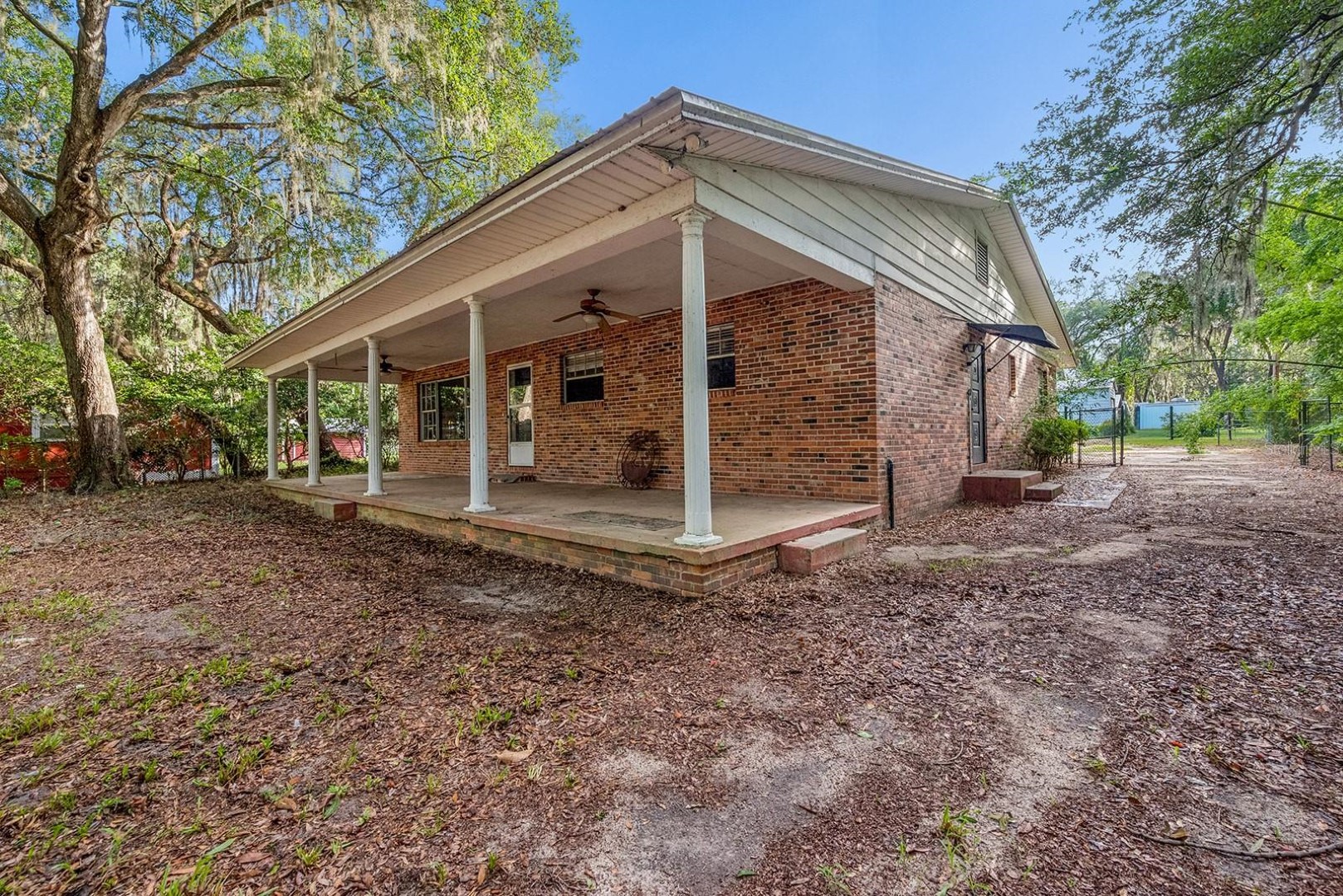
Thinking about selling your home in Florida? Before putting that "For Sale" sign in the yard, it's important to understand how much selling your house could actually cost—and how much money you might walk away with at closing.
Whether you're selling a home in Jacksonville, Gainesville, Melrose, Keystone Heights, Hawthorne, Starke, or anywhere in North Florida, knowing your potential selling expenses can help you plan ahead, price strategically, and avoid unexpected surprises.
Many homeowners focus on the asking price, but the amount your home sells for isn't necessarily the amount you'll receive.
Between real estate commissions, closing costs, mortgage payoffs, repairs, and other expenses, your final proceeds can vary significantly.
So, how much does it really cost to sell a house in Florida in 2026?
Let's break it down.
1. What Are the Typical Costs of Selling a House in Florida?
There isn't one fixed percentage that every Florida homeowner pays when selling.
Your total costs depend on several factors, including your home's sale price, location, mortgage balance, property condition, negotiated contract terms, and the services you choose.
Common expenses may include:
-
Real estate agent compensation.
-
Florida documentary stamp taxes on the deed.
-
Title insurance and closing-related fees.
-
Prorated property taxes.
-
Repairs or improvements before selling.
-
Buyer concessions negotiated in the contract.
-
Mortgage payoff and related charges.
-
Moving expenses.
-
HOA or condominium-related fees, if applicable.
Some expenses are relatively predictable, while others depend on the specific transaction.
The best way to estimate your selling costs is to calculate them using your expected sale price and a realistic breakdown of your expenses.
Before you start calculating, it helps to know what your home may be worth in today's market.
Find Out What Your North Florida Home May Be Worth
2. How Much Are Realtor Commissions in Florida?
Real estate agent compensation is often one of the largest expenses associated with selling a home.
However, there is no standard or legally required real estate commission rate in Florida.
Commission amounts and payment arrangements are negotiable.
The compensation a seller agrees to pay depends on the listing agreement, the services provided, and any additional terms negotiated during the transaction.
Does the Seller Pay Both Real Estate Agents?
Not necessarily.
Depending on the agreement and transaction structure, a seller may agree to compensate their listing brokerage and may also negotiate payment toward a buyer's brokerage compensation.
Alternatively, buyer brokerage compensation may be handled through a separate agreement or negotiated arrangement.
Sellers should review their listing agreement carefully and understand what services and compensation are included.
Example of Negotiated Commission Costs
For illustration only, here's what different total commission arrangements would equal on a $300,000 home sale:
| Example Rate | Total Compensation |
|---|---|
| 4% | $12,000 |
| 5% | $15,000 |
| 6% | $18,000 |
These percentages are hypothetical examples, not standard, required, or recommended commission rates.
What sellers should know: Ask your real estate professional to explain the proposed compensation structure and how it affects your estimated proceeds.
3. What Closing Costs Does a Home Seller Pay in Florida?
In addition to negotiated real estate compensation, sellers may be responsible for certain closing costs.
The exact amount depends on the property's location, the purchase contract, and local customs.
Florida Documentary Stamp Tax on the Deed
Florida generally charges documentary stamp tax when real property is transferred.
For most Florida counties, including those throughout North Florida, the general rate is:
$0.70 per $100 of consideration, or portion thereof.
For example:
| Sale Price | Estimated Deed Documentary Stamp Tax |
|---|---|
| $200,000 | $1,400 |
| $300,000 | $2,100 |
| $400,000 | $2,800 |
| $500,000 | $3,500 |
These examples assume the sale price equals the taxable consideration and no special exemptions or adjustments apply.
Miami-Dade County has different rules for certain transfers.
The contract generally determines which party is responsible for this tax.
Title Insurance and Settlement Fees
Title-related expenses may include:
-
Title searches.
-
Owner's title insurance.
-
Settlement or closing fees.
-
Document preparation.
-
Recording-related charges.
-
Other transaction-specific services.
Who pays for title insurance and certain closing expenses can vary based on the county, contract, and negotiated terms.
In some North Florida transactions, sellers pay for the owner's title insurance policy, while in others the buyer may be responsible.
Always review your purchase contract and estimated settlement statement rather than assuming a particular expense belongs to the seller.
4. Will You Owe Property Taxes When Selling Your Florida Home?
Florida property taxes are generally paid in arrears.
This means sellers commonly provide a credit at closing for their share of property taxes covering the portion of the year they owned the home.
For example, if you sell your home partway through the year, the closing statement may include a tax proration reflecting your period of ownership.
The calculation depends on the closing date, available tax information, and contract terms.
What Happens to Your Homestead Exemption?
Florida's homestead exemption can reduce the taxable value of a qualifying primary residence.
When ownership changes, the buyer's eligibility and future tax assessment may differ from the seller's.
Sellers should also understand that their current property tax bill may not represent what the next owner will pay.
If you're planning to purchase another Florida homestead, you may want to investigate whether you're eligible for Save Our Homes assessment portability.
For property-specific tax questions, consult the county property appraiser or a qualified tax professional.
5. Should You Make Repairs Before Selling Your House?
One expense sellers sometimes overlook is the cost of preparing a home for the market.
Not every property needs a major renovation before being listed.
In fact, spending thousands of dollars on improvements doesn't guarantee you'll recover that investment when the home sells.
However, certain repairs and presentation improvements may help attract buyers.
Common Pre-Listing Expenses
These might include:
-
Interior painting.
-
Landscaping and yard cleanup.
-
Minor plumbing or electrical repairs.
-
Replacing damaged fixtures.
-
Professional cleaning.
-
Pressure washing.
-
Flooring repairs.
-
Roof or HVAC maintenance.
-
Decluttering and staging.
What About Selling a House As-Is?
Some sellers choose to market their properties in their current condition.
An as-is sale may appeal to homeowners who don't want to complete significant repairs before selling.
However, selling as-is does not eliminate applicable disclosure obligations or automatically prevent buyers from requesting inspections or negotiating terms.
For homeowners selling older houses, fixer-uppers, inherited properties, or homes requiring substantial work, discussing an as-is pricing strategy may be worthwhile.
The goal isn't necessarily to make your house perfect. It's to determine which improvements make financial sense for your particular property and market.
6. What Are Seller Concessions?
Seller concessions are expenses or credits a seller agrees to provide as part of a real estate transaction.
For example, a buyer may request that the seller contribute toward certain allowable closing costs.
Other negotiations may involve repairs, credits, or price adjustments.
Concessions can sometimes help a transaction move forward, but they also affect how much money the seller receives.
Example
Suppose your home sells for $300,000 and you agree to provide a $5,000 closing-cost credit to the buyer.
That $5,000 generally reduces your proceeds, assuming the credit is permitted under the buyer's financing terms and the contract.
Seller concessions are negotiable and aren't required in every transaction.
7. What Happens to Your Mortgage When You Sell?
If you still owe money on your house, your outstanding mortgage balance will generally be paid off using the sale proceeds at closing.
Your mortgage payoff may include more than the principal balance shown on your most recent statement.
It can also include accrued interest, applicable fees, and other amounts required to satisfy the loan.
If you have a home equity loan, HELOC, or other lien secured by the property, those obligations may also need to be addressed.
Example
If you sell your home for $350,000 and owe $180,000 on your mortgage, the difference is $170,000.
However, that isn't necessarily your final profit.
You must still account for selling expenses, any other liens, and other applicable adjustments.
This is why it's important to distinguish between home equity, sale proceeds, and actual profit.
8. How Much Money Will You Make Selling Your House?
Let's look at a hypothetical example of a Florida home selling for $300,000.
The following figures are for illustration only and are not a quote or estimate for a specific property.
Example: Selling a $300,000 Home in Florida
| Item | Estimated Amount |
|---|---|
| Home sale price | $300,000 |
| Negotiated real estate compensation (example: 5%) | -$15,000 |
| Documentary stamp tax on deed | -$2,100 |
| Illustrative title and settlement expenses | -$1,500 |
| Illustrative property tax proration | -$2,000 |
| Illustrative repairs and preparation | -$3,000 |
| Mortgage payoff | -$150,000 |
| Estimated proceeds | $126,400 |
In this example, the seller receives approximately $126,400 at closing.
The actual amount could be higher or lower depending on contract terms, taxes, loan payoff, closing expenses, concessions, and other adjustments.
The example excludes moving expenses, potential income taxes, additional liens, and other property-specific costs.
Important: Your proceeds at closing are not necessarily your taxable gain or your net investment profit.
9. Do You Have to Pay Capital Gains Tax When Selling Your Florida Home?
Florida does not impose an individual state income tax, but federal income tax may apply to certain gains from selling real estate.
For qualifying primary residences, federal law generally allows eligible taxpayers to exclude up to:
-
$250,000 of gain for certain individual filers.
-
$500,000 of gain for certain married couples filing jointly.
Eligibility depends on requirements such as ownership, use, and other applicable tax rules.
The exclusion applies to qualifying gain—not the total sale price or cash received at closing.
Investment properties, rental homes, second homes, and inherited properties may be subject to different tax treatment.
For questions about your specific situation, consult a qualified tax professional.
10. Does It Cost More to Sell a Waterfront Home or Property With Acreage?
North Florida offers many property types beyond traditional subdivision homes.
Depending on the property, selling expenses may differ for:
-
Lakefront residences.
-
Homes with acreage.
-
Manufactured homes.
-
Rural properties with well and septic systems.
-
Homes with workshops or detached buildings.
-
Farms and agricultural land.
-
Investment properties.
For example, a lakefront home may require additional attention to docks, seawalls, waterfront improvements, or insurance considerations.
A rural property may raise questions about surveys, easements, septic systems, access roads, or permitted structures.
These factors don't automatically make a property more expensive to sell, but they can influence preparation, negotiations, and due diligence.
Working with professionals familiar with the specific property type can help sellers understand what to expect.
11. How Can You Reduce the Cost of Selling Your House?
While some selling expenses are unavoidable, there are ways to manage costs and make informed financial decisions.
Price Your Home Strategically
A competitive asking price can help attract qualified buyers and reduce the risk of extended time on the market.
Avoid Unnecessary Renovations
Focus on improvements that are appropriate for the home's condition and local buyer expectations.
Understand Your Negotiated Expenses
Review agent compensation, closing-cost responsibilities, and any proposed concessions before signing agreements.
Prepare Your Property for Marketing
Clean, well-presented homes with quality photography and accurate descriptions can make a stronger impression on buyers.
Request a Seller Net Proceeds Estimate
A seller net sheet can provide a clearer picture of your potential proceeds after estimated expenses and mortgage payoff.
This can help you compare different offer scenarios and make more informed decisions.
12. Is 2026 a Good Time to Sell a House in North Florida?
Whether it's the right time to sell depends on your circumstances and local market conditions.
Factors to consider include:
-
Your home's estimated market value.
-
The amount of equity you have.
-
Your current mortgage terms.
-
Competing homes for sale.
-
Recent comparable sales.
-
Buyer demand in your area.
-
Your plans after selling.
-
The costs associated with keeping the property.
Real estate markets can vary considerably across North Florida.
A lakefront home in Melrose may have a different buyer pool than a traditional residence in Jacksonville or an acreage property in Hawthorne.
That's why local comparable sales and current competition are important when evaluating a selling strategy.
Rather than trying to predict the perfect time to sell, focus on understanding your property's value, potential expenses, and personal goals.
Selling a Home in North Florida? Start With Your Property's Value.
If you're thinking about selling your home in Melrose, Keystone Heights, Hawthorne, Starke, Gainesville, Jacksonville, Orange Park, Middleburg, or surrounding North Florida communities, understanding your home's potential market value is one of the most important first steps.
At CB Isaac Realty, we help homeowners explore their real estate options, understand local market conditions, and prepare for the selling process.
Whether you own a traditional residential home, lakefront property, country home with acreage, or investment property, knowing what your home may be worth can help you begin planning.
Wondering How Much You Could Walk Away With?
Your home's estimated selling price is only one part of the equation.
To understand your potential proceeds, you'll also want to consider your mortgage payoff, closing expenses, and other costs.
Start by finding out what your North Florida property may be worth.
CLICK HERE TO REQUEST YOUR PROPERTY VALUATION
Or contact our team to discuss your real estate goals.
CB Isaac Realty
352-475-2199
www.cbisaacrealty.com
Helping North Florida homeowners make informed decisions when buying and selling real estate.
Disclaimer: All figures are illustrative. Actual selling costs, compensation arrangements, tax obligations, and net proceeds depend on the individual transaction. This article provides general information and is not legal, tax, or financial advice.
