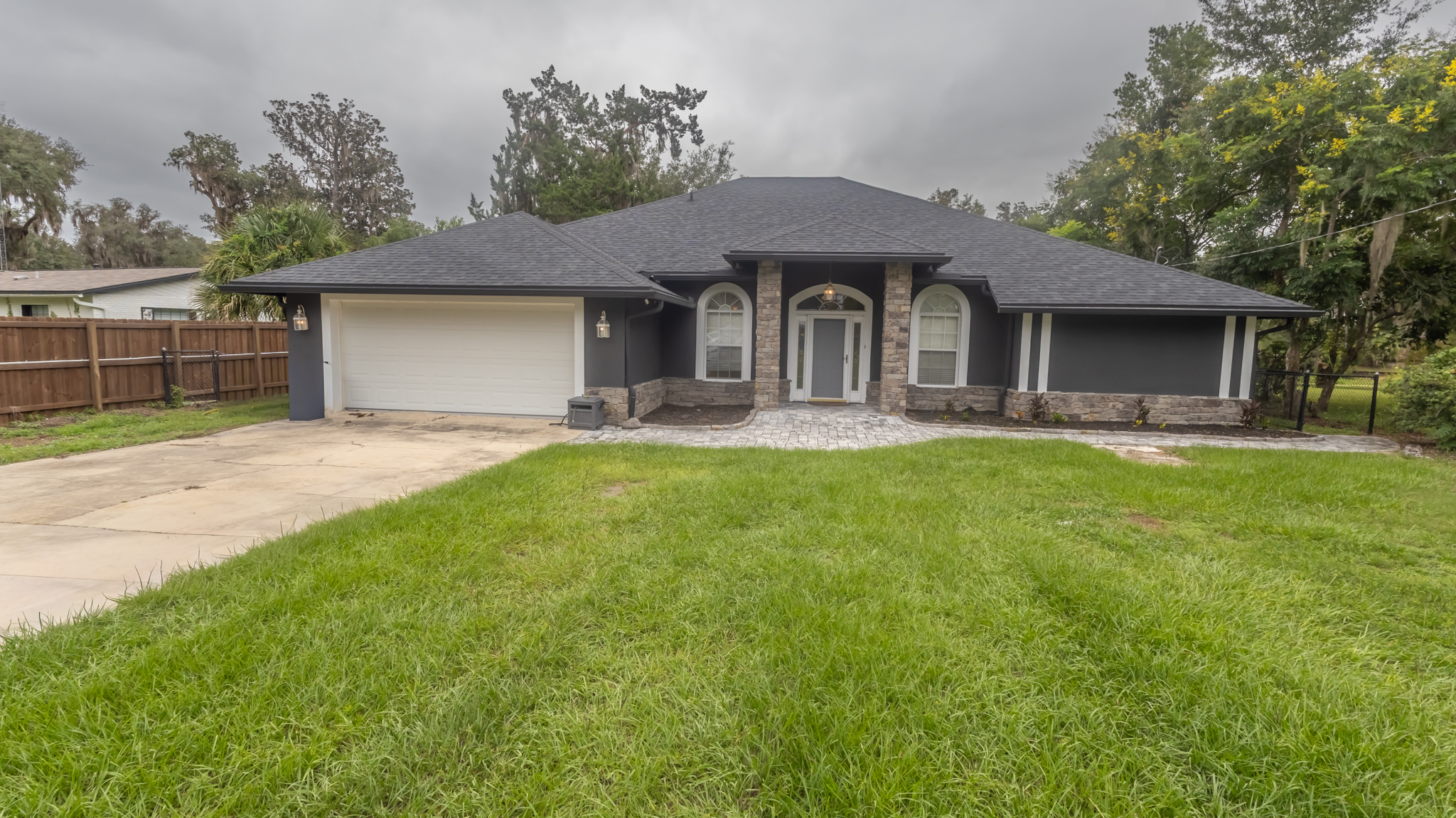
Are you throwing money away by renting, or could buying a house actually cost you more?
It's one of the biggest financial questions people face in 2026: Is it better to rent or buy a house?
With mortgage rates, home prices, rent payments, and the cost of living all affecting household budgets, deciding whether to rent or buy isn't always straightforward.
For some people, purchasing a home is an opportunity to build equity, establish long-term stability, and invest in their future. For others, renting provides financial flexibility, fewer maintenance responsibilities, and the freedom to relocate.
If you're currently renting in Jacksonville, Gainesville, Keystone Heights, Melrose, Starke, Hawthorne, or anywhere in North Florida, you may be wondering whether now is the time to become a homeowner.
Let's break down the real costs, advantages, disadvantages, and important factors to consider before making your decision.
1. Is It Better to Rent or Buy in 2026?
The short answer: Buying may be the better long-term choice if you're financially prepared and plan to stay in one place for several years. Renting may be the smarter option if you need flexibility or aren't ready for the financial responsibilities of homeownership.
Neither option is automatically better for everyone.
The decision depends on several factors:
-
Your monthly income and expenses.
-
Your savings and credit history.
-
Current mortgage rates.
-
Home prices in your desired area.
-
Local rental prices.
-
How long you plan to stay.
-
Your ability to handle maintenance and unexpected repairs.
-
Your long-term financial goals.
The most important thing is understanding the total cost of each option—not simply comparing rent to a mortgage payment.
2. What Are the Benefits of Buying a House?
Homeownership offers several potential advantages that renting typically doesn't.
You Can Build Equity Over Time
One of the biggest financial benefits of buying a home is the opportunity to build equity.
Home equity is the difference between your home's market value and the amount you still owe on your mortgage.
For example:
-
Your home is worth $300,000.
-
You owe $240,000 on your mortgage.
-
Your home equity is approximately $60,000.
As you pay down your mortgage principal, your equity generally increases.
If your property's value rises, that can also increase your equity. However, property values can decline, and equity isn't guaranteed to grow.
More Stability in Your Housing Situation
When you rent, your landlord may increase rent when your lease renews, subject to applicable laws and lease terms.
With a fixed-rate mortgage, your principal and interest payment generally remain the same throughout the loan term.
However, property taxes, insurance, HOA fees, and maintenance expenses can still increase.
Freedom to Personalize Your Home
Want to repaint the walls, remodel the kitchen, install new flooring, or create your dream outdoor space?
Homeownership typically provides greater freedom to customize your property, subject to building permits, zoning, HOA rules, and other restrictions.
Potential Long-Term Financial Benefits
Over time, homeowners may benefit from mortgage principal reduction and property appreciation.
However, those gains must be weighed against interest, taxes, insurance, repairs, transaction costs, and other ownership expenses.
Buying a home can help build long-term wealth, but it's not a guaranteed investment return.
3. What Are the Benefits of Renting a House?
Renting isn't necessarily a bad financial decision.
In fact, there are situations where renting makes more sense than buying.
Lower Upfront Costs
Renting generally requires less money upfront than purchasing a home.
Typical rental expenses may include:
-
Application fees.
-
Security deposit.
-
First month's rent.
-
Possible last month's rent.
-
Moving expenses.
Buying a home may require a down payment, closing costs, inspections, and other expenses.
Fewer Maintenance Responsibilities
When you rent, the landlord is generally responsible for many major property repairs, depending on the lease and applicable law.
If the roof needs replacement or the HVAC system stops working, you may not be responsible for the full repair expense.
Homeowners, on the other hand, must budget for these costs.
More Flexibility
Renting can make it easier to relocate for employment, family needs, or lifestyle changes.
If you're uncertain about where you want to live long-term, renting may be the better option.
No Direct Exposure to Home Price Declines
Renters don't own the property, so they don't directly experience a loss of home equity if its market value falls.
However, renters may still face increasing housing costs when leases renew.
4. Renting vs. Buying: Which Costs More Each Month?
This is where many people get confused.
A mortgage payment isn't the same as the total cost of owning a home.
To make a fair comparison, you need to consider all housing expenses.
Example: Renting vs. Buying a $300,000 Home
Let's compare a hypothetical rental payment with purchasing a $300,000 house.
Assume the buyer makes a 10% down payment and finances the remaining $270,000 over 30 years at a 7.18% fixed interest rate.
| Monthly expense | Renting | Buying |
|---|---|---|
| Rent | $1,900 | — |
| Mortgage principal & interest | — | $1,829 |
| Property taxes | — | $300 |
| Homeowners insurance | — | $250 |
| Mortgage insurance | — | $125 |
| Maintenance reserve | — | $250 |
| Renters insurance | $20 | — |
| Estimated monthly total | $1,920 | $2,904 |
Illustrative example only. Rental amount, property taxes, insurance, mortgage insurance, and maintenance costs are hypothetical—not local market averages or lender quotes. Utilities, HOA fees, upfront costs, and opportunity costs are excluded. The mortgage rate reflects Freddie Mac's November 5, 2026 national average.
In this example, owning costs approximately $984 more per month than renting before considering differences in utilities or other expenses.
However, part of the mortgage payment reduces the loan principal, helping build equity.
Rent payments generally do not create ownership equity for the renter.
Does That Mean Buying Is Always Better Long-Term?
No.
Buying also involves transaction costs, interest, repairs, and the risk of declining property values.
Meanwhile, renters may be able to save or invest the money they would otherwise spend on a down payment and higher monthly housing expenses.
The best financial outcome depends on how long you stay, future housing costs, investment returns, and changes in home value.
5. How Much Money Do You Need to Buy a House in 2026?
One common misconception is that you need a 20% down payment to purchase a home.
Many buyers may qualify for mortgage programs requiring less than 20% down.
Potential options include:
Conventional Loans
Certain conventional mortgage programs offer down payments as low as 3% for eligible borrowers.
FHA Loans
Eligible borrowers may qualify for an FHA loan with a down payment as low as 3.5%.
VA Loans
Eligible veterans, service members, and certain surviving spouses may qualify for VA financing without a down payment.
USDA Loans
Some qualifying buyers purchasing eligible properties in designated rural areas may qualify for USDA financing with no down payment.
North Florida includes communities where USDA-eligible properties may be available, but eligibility depends on the specific address and borrower qualifications.
Don't Forget Closing Costs
In addition to your down payment, buyers should budget for potential expenses such as:
-
Loan origination fees.
-
Appraisal fees.
-
Home inspections.
-
Title and settlement charges.
-
Prepaid homeowners insurance.
-
Property tax escrows.
-
Other lender and closing expenses.
Before assuming you can't afford to buy, speak with a qualified lender about available financing programs and your actual purchasing power.
6. Are Mortgage Rates Too High to Buy a House in 2026?
Mortgage rates are an important consideration for buyers.
According to Freddie Mac, the average 30-year fixed mortgage rate was 7.18% as of November 5, 2026.
That was down from 7.24% the previous week, but higher than the 6.22% average reported one year earlier.
Higher mortgage rates increase monthly borrowing costs, which can reduce purchasing power.
Should You Wait for Mortgage Rates to Drop?
Possibly, but waiting involves uncertainty.
Mortgage rates could decline, remain elevated, or increase.
If rates decrease, more buyers may enter the market, potentially increasing competition for desirable properties.
If rates rise, monthly payments could become more expensive.
The best time to buy isn't necessarily when mortgage rates reach their lowest point. It's when you can comfortably afford a home that fits your needs.
Don't purchase a home based solely on the expectation that refinancing will be available later.
7. What Is Happening in Florida's Housing Market in 2026?
Florida's housing market has changed considerably since the intense competition seen in earlier years.
According to Florida Realtors' September 2026 report:
-
The statewide median sale price for existing single-family homes was $415,000.
-
The median price increased approximately 1.2% year over year.
-
Florida recorded 20,537 existing single-family home sales during September.
-
The statewide supply of existing single-family homes was approximately 4.4 months.
These figures suggest a relatively stable statewide market, although conditions vary by location and property type.
What Does This Mean for Renters Considering Buying?
Depending on the local market, buyers may have opportunities to:
-
Compare more properties before purchasing.
-
Negotiate on homes that have been listed longer.
-
Request seller concessions.
-
Explore different price ranges.
-
Consider nearby communities that offer better value.
However, a slower market doesn't automatically mean every home is a bargain.
The right property at the right price matters more than trying to perfectly time the market.
8. Is Renting Really Throwing Money Away?
You've probably heard someone say:
"Renting is just throwing money away."
But that statement oversimplifies the issue.
When you rent, you're paying for housing, flexibility, and the use of a property without taking on all the financial risks of ownership.
When you buy, part of your mortgage payment goes toward principal, but you also pay interest, taxes, insurance, and maintenance.
Here's the Difference
Renting: Your payments provide a place to live, but generally don't create ownership equity.
Buying: Your payments help cover housing costs, and the principal portion of your mortgage reduces what you owe.
For financially prepared buyers who plan to remain in a home for many years, buying may provide meaningful long-term benefits.
But for someone who expects to relocate soon or has limited savings, renting may be the more practical decision.
Renting isn't automatically wasting money, and buying isn't automatically a profitable investment.
9. How Long Should You Stay in a House to Make Buying Worth It?
The amount of time you plan to stay in a home is one of the most important factors in the rent-versus-buy decision.
Buying and selling real estate involve transaction costs.
These may include closing fees, loan expenses, moving costs, and selling expenses.
If you purchase a home and sell it shortly afterward, you may not have enough time to recover those costs.
When Renting May Make More Sense
Renting may be preferable if:
-
You expect to move within the next year or two.
-
Your employment situation is uncertain.
-
You're exploring a new community.
-
You're saving for a future purchase.
-
You aren't ready for maintenance responsibilities.
When Buying May Make More Sense
Buying may be attractive if:
-
You plan to remain in the area for several years.
-
Your income is stable.
-
You have sufficient emergency savings.
-
You can afford the full cost of ownership.
-
You want greater control over your living space.
-
You're comfortable with the financial risks of owning property.
There isn't one universal number of years that guarantees buying will be better. A personalized rent-versus-buy calculation is more useful.
10. Is It Better to Rent or Buy in North Florida?
North Florida offers a variety of housing options, including suburban neighborhoods, smaller communities, waterfront homes, and rural properties.
Your decision may depend partly on where you want to live.
Jacksonville, Florida
Jacksonville offers a broad range of rental and ownership opportunities.
Buyers can explore established neighborhoods, suburban communities, townhomes, and single-family residences.
Gainesville, Florida
Gainesville has housing options serving students, professionals, families, and long-term residents.
Renting may appeal to people with shorter-term plans, while purchasing may make sense for those expecting to stay.
Keystone Heights, Florida
Keystone Heights offers opportunities to explore small-town living, traditional homes, and properties with additional land.
Melrose, Florida
Melrose appeals to buyers interested in a quieter setting, freshwater lakes, and rural residential properties.
Starke and Hawthorne, Florida
These communities may be worth considering for buyers exploring alternatives to larger urban markets.
Middleburg and Green Cove Springs, Florida
Buyers interested in Clay County can explore residential neighborhoods and properties with a variety of lot sizes.
If you're comparing rental costs with home prices, consider expanding your search to nearby North Florida communities. You may discover options you hadn't previously considered.
11. Seven Signs You May Be Ready to Stop Renting and Buy a House
Wondering whether you're financially ready to become a homeowner?
Here are seven signs worth considering.
1. You Have a Stable Income
Consistent income can make it easier to qualify for financing and manage monthly expenses.
2. You've Built Up Your Savings
Having funds for a down payment, closing costs, moving expenses, and emergencies can help make homeownership more manageable.
3. Your Credit Is in Good Shape
Your credit profile can affect mortgage eligibility and borrowing costs.
4. You Plan to Stay in the Area
Longer-term plans may make buying more appealing.
5. You Can Afford More Than the Mortgage
You understand that taxes, insurance, repairs, and maintenance are part of the cost of owning.
6. You're Comfortable With Home Maintenance
You are prepared to handle routine upkeep and unexpected repairs.
7. You've Found a Home That Fits Your Needs
You're ready to purchase a property that works for your lifestyle, budget, and future plans.
You don't have to have everything figured out before exploring homeownership. But understanding your finances is an important first step.
12. Rent vs. Buy: Which Is Better for Your Situation?
| Your situation | Option worth considering |
|---|---|
| Planning to move within 1–2 years | Renting |
| Stable income and long-term plans | Buying |
| Limited emergency savings | Renting while saving |
| Wanting more control over your property | Buying |
| Unsure where you want to live | Renting |
| Prepared for repairs and ownership costs | Buying |
| Need flexibility for work or relocation | Renting |
| Want to build equity over time | Buying |
These are general guidelines, not universal rules.
A home purchase should always fit your individual financial circumstances.
Frequently Asked Questions About Renting vs. Buying in 2026
Is it cheaper to rent or buy a house in 2026?
It depends on local rent prices, home prices, mortgage rates, insurance, taxes, and how long you plan to stay. Renting may have lower monthly costs in some markets, while buying can offer long-term equity benefits.
Is buying a house worth it in 2026?
It can be for financially prepared buyers who plan to stay long-term and can comfortably afford ownership costs. However, buying isn't the best choice for everyone.
Should I keep renting until mortgage rates drop?
That depends on your finances and goals. Rates are unpredictable, so compare your current rental costs with realistic ownership expenses rather than relying on future rate predictions.
Can I buy a house with little money down?
Some qualifying buyers may be eligible for conventional, FHA, VA, USDA, or down-payment assistance programs with relatively low upfront down-payment requirements.
Is renting better if I plan to move soon?
Often, yes. Renting generally offers greater flexibility and avoids some of the transaction costs associated with buying and selling a home.
Does buying a house build wealth?
Homeownership can help build wealth through principal repayment and property appreciation. However, maintenance expenses, interest, transaction costs, and declining home values can affect the outcome.
What credit score do I need to buy a house?
Requirements vary by loan program and lender. A mortgage professional can explain which options may be available based on your financial situation.
Can I afford to buy a house if I'm currently renting?
Possibly. Your ability to buy depends on income, debt, credit, savings, available loan programs, and local home prices. A lender can help determine your financing options.
Final Verdict: Is It Better to Rent or Buy a House in 2026?
If you're financially prepared, plan to stay in one place for several years, and can comfortably afford the costs of ownership, buying a house in 2026 may be a worthwhile decision.
Homeownership can provide greater stability, freedom to personalize your property, and opportunities to build equity over time.
However, renting can be the smarter financial choice when flexibility, lower upfront expenses, or fewer maintenance responsibilities are priorities.
Ultimately, the decision isn't simply about whether rent or mortgage payments are higher.
It's about choosing the housing option that supports your financial security, lifestyle, and future goals.
The best question isn't "Is renting or buying better for everyone?" It's "Which option is better for me right now?"
Ready to Explore Homeownership in North Florida?
You might be closer to owning a home than you think!
At CB Isaac Realty, we help buyers explore homes throughout North Florida, including Jacksonville, Gainesville, Keystone Heights, Melrose, Starke, Hawthorne, Middleburg, Green Cove Springs, and surrounding communities.
Whether you're a first-time buyer, relocating, or simply wondering what your budget could buy, our team can help you explore available properties and understand the next steps.
Start Your Home Search Today
BROWSE HOMES FOR SALE IN NORTH FLORIDA
EXPLORE ALL AVAILABLE PROPERTIES
Already own a home and thinking about making a move?
FIND OUT WHAT YOUR HOME MAY BE WORTH
CB Isaac Realty
Melrose, Florida
352-475-2199
www.cbisaacrealty.com
Helping North Florida buyers and sellers make informed real estate decisions.
