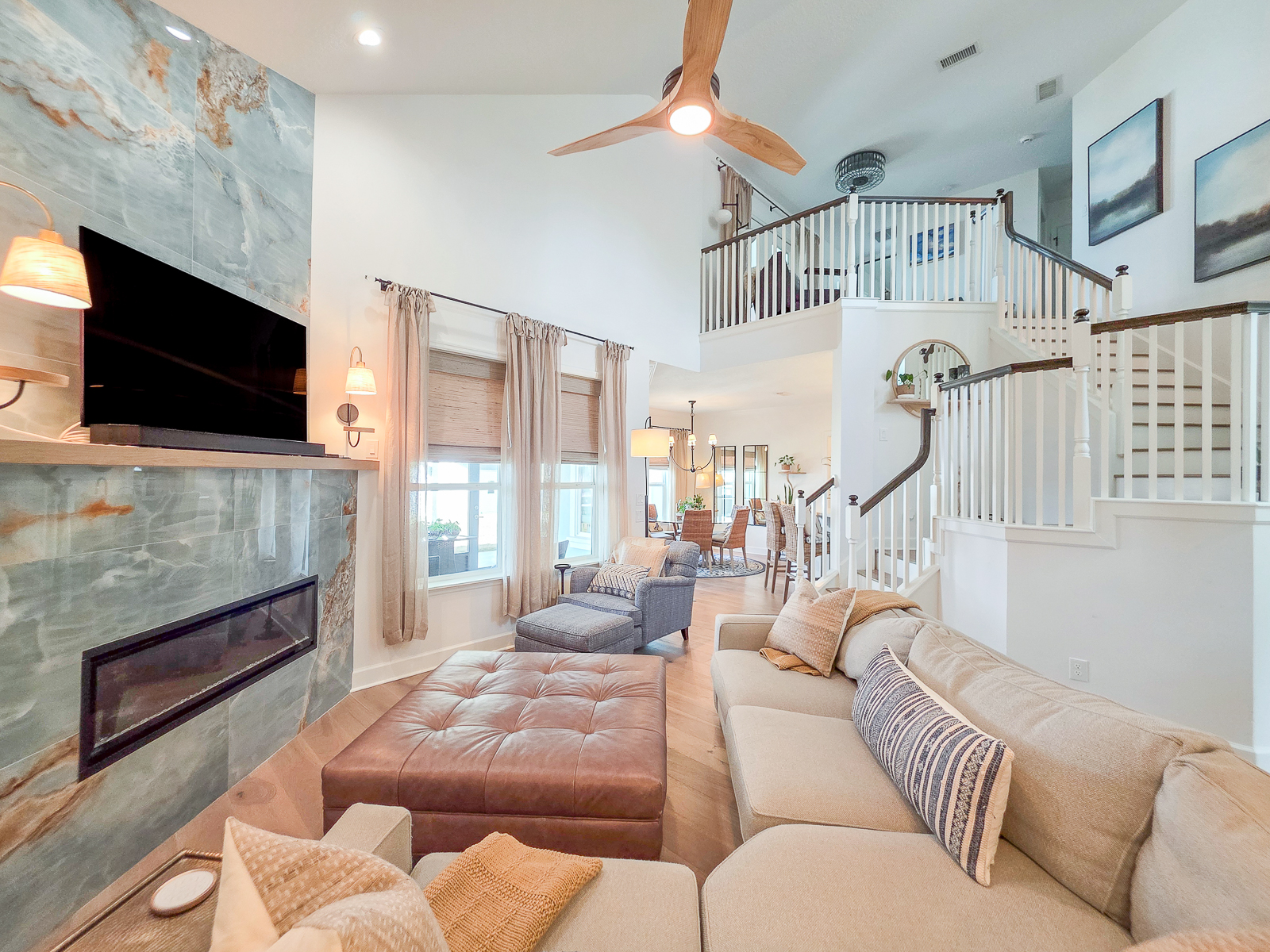
Deciding whether to sell your home is a major decision. For many homeowners, the question isn't simply, “Can I sell?” but rather, “Is now the right time for me to sell?”
Your financial situation, future plans, current property, and local real estate market all play a role in that answer.
For homeowners throughout Melrose, Keystone Heights, Hawthorne, Starke, Gainesville, Jacksonville, and surrounding North Florida communities, knowing what your property is worth and understanding your options can help you make a more informed decision.
If selling has been on your mind, here are seven signs it may be time to take the next step.
1. Your Home May Be Worth More Than You Realize
One of the first questions most potential sellers ask is, “What is my home worth?”
Even if you haven't considered selling seriously, understanding your property's current value can be useful. Real estate markets change, neighborhoods develop, buyer preferences shift, and improvements you've made to your property may affect its marketability.
The price you paid for your home years ago doesn't necessarily reflect what a buyer may be willing to pay today.
If you're curious, a property valuation is a simple place to start.
Find Out What Your Property May Be Worth
You don't have to commit to selling simply because you check your property's value. Think of it as information that can help you decide what makes sense next.
2. You've Built Significant Equity
Equity is the difference between your home's value and what you still owe on your mortgage.
For homeowners who have owned their property for several years, a combination of mortgage payments and changes in property value may mean they have accumulated more equity than they realize.
That equity could potentially help fund your next move, provide a larger down payment on another property, or help you accomplish other financial goals after selling.
However, your home's estimated value isn't the same as your net proceeds. Mortgage payoff amounts, closing costs, commissions, repairs, and other expenses can affect how much money you ultimately receive.
A real estate professional can help you estimate both your potential sale price and likely proceeds before you decide to list.
3. Your Current Home No Longer Fits Your Lifestyle
A home can be perfect when you purchase it and no longer make sense several years later.
Maybe you need another bedroom. Perhaps you're tired of maintaining a large house and want to downsize. You may want acreage, a lakefront property, a shorter commute, or a home closer to family.
For some North Florida homeowners, selling isn't about leaving the area at all. It's about finding a property that better matches the way they want to live now.
You might be ready for:
- More or less living space
- A larger yard or acreage
- Waterfront living
- Fewer maintenance responsibilities
- A different community
- More privacy
- A shorter commute
- A property better suited to your future plans
When your current home begins limiting your lifestyle rather than supporting it, exploring your options may be worthwhile.
4. Buyers May Be Looking for Exactly What You Own
North Florida real estate is incredibly diverse, and buyers aren't all searching for the same type of property.
Some want traditional single-family homes. Others specifically search for lakefront homes, acreage, historic properties, homes with workshops, guest accommodations, rural properties, or vacant land.
A feature you consider ordinary because you've lived with it for years could be exactly what another buyer has been struggling to find.
This is particularly important in smaller North Florida markets, where unique properties don't always have dozens of comparable homes available at the same time.
Understanding how your property fits into the current market can help determine how it should be positioned and marketed.
5. You're Watching Nearby Properties Sell and Wondering About Yours
When a nearby home sells, it's natural to wonder what that means for your property.
Comparable sales are an important part of determining value, but simply taking a neighbor's sale price and applying it to your home can be misleading.
Two nearby properties may differ significantly in:
- Square footage
- Lot size
- Condition
- Renovations
- Age
- Waterfront access
- Outbuildings
- Location
- Acreage
- Floor plan
- Overall marketability
For lakefront and acreage properties, differences can become even more significant.
A professional market analysis considers multiple relevant properties and adjusts for differences rather than relying on one nearby sale.
6. You've Been Thinking About Moving but Keep Putting It Off
Sometimes the clearest sign is simply that you've been considering a move for a long time.
You may have thought about relocating closer to family, buying more land, downsizing, moving closer to Jacksonville or Gainesville, or finally purchasing the lake house you've always wanted.
The uncertainty surrounding selling can make homeowners delay even exploring their options.
But researching your home's value doesn't mean you have to put a sign in the yard tomorrow.
You can start by answering a few basic questions:
What could my property realistically sell for?
How much might I walk away with after the sale?
How long could selling take?
What should I do before listing?
Where would I move next?
Once you have those answers, deciding whether to sell becomes much easier.
7. You're Ready to Know What You Could Actually Walk Away With
The potential sale price gets most of the attention, but sellers should also consider what happens after closing.
Suppose your home could sell for a certain amount. What would remain after paying off your mortgage and accounting for estimated selling expenses?
That number may be more important to your decision than the listing price itself.
Knowing your potential proceeds can help you determine what you could afford next and whether selling supports your broader goals.
This is why it's helpful to evaluate your situation before making major repairs, purchasing another property, or assuming you need to wait another year.
Should You Sell Your North Florida Home in 2026?
There isn't one answer that applies to every homeowner.
The right time to sell depends on your property, finances, goals, and local market conditions.
Instead of trying to perfectly “time the market,” start by gathering information.
Find out what your property may be worth. Look at recent comparable sales. Understand your potential selling expenses. Consider what you would do after the sale.
Then you can decide whether selling now makes sense for you.
What Types of North Florida Properties Are Buyers Searching For?
North Florida attracts buyers looking for many different lifestyles and property types.
CB Isaac Realty works with properties throughout the region, including residential homes, lakefront and waterfront homes, acreage, vacant land, historic properties, investment opportunities, and commercial real estate.
Communities such as Melrose, Keystone Heights, Hawthorne, Starke, Gainesville, Jacksonville, and the surrounding Lake Region each have their own characteristics and buyer pools.
Effective marketing isn't just about putting a property online. It's about identifying what makes the property different and putting it in front of buyers who may value those features.
Curious What Your North Florida Property Is Worth?
You don't need to be ready to sell today to start planning.
If you've owned your property for several years, are considering a move, or simply want to know where you stand, start by getting an estimate of your property's current value.
If you're considering selling and want a more detailed look at your property's market position, contact CB Isaac Realty to discuss your options.
CB Isaac Realty
352-475-2199
Whether you're selling a home in Melrose, Keystone Heights, Hawthorne, Jacksonville, Gainesville, Starke, or elsewhere in North Florida, understanding your property's value is the first step toward deciding what comes next.
:format(webp):quality(80)/u.realgeeks.media/cbisaacrealty/cbi_logo(2).png)