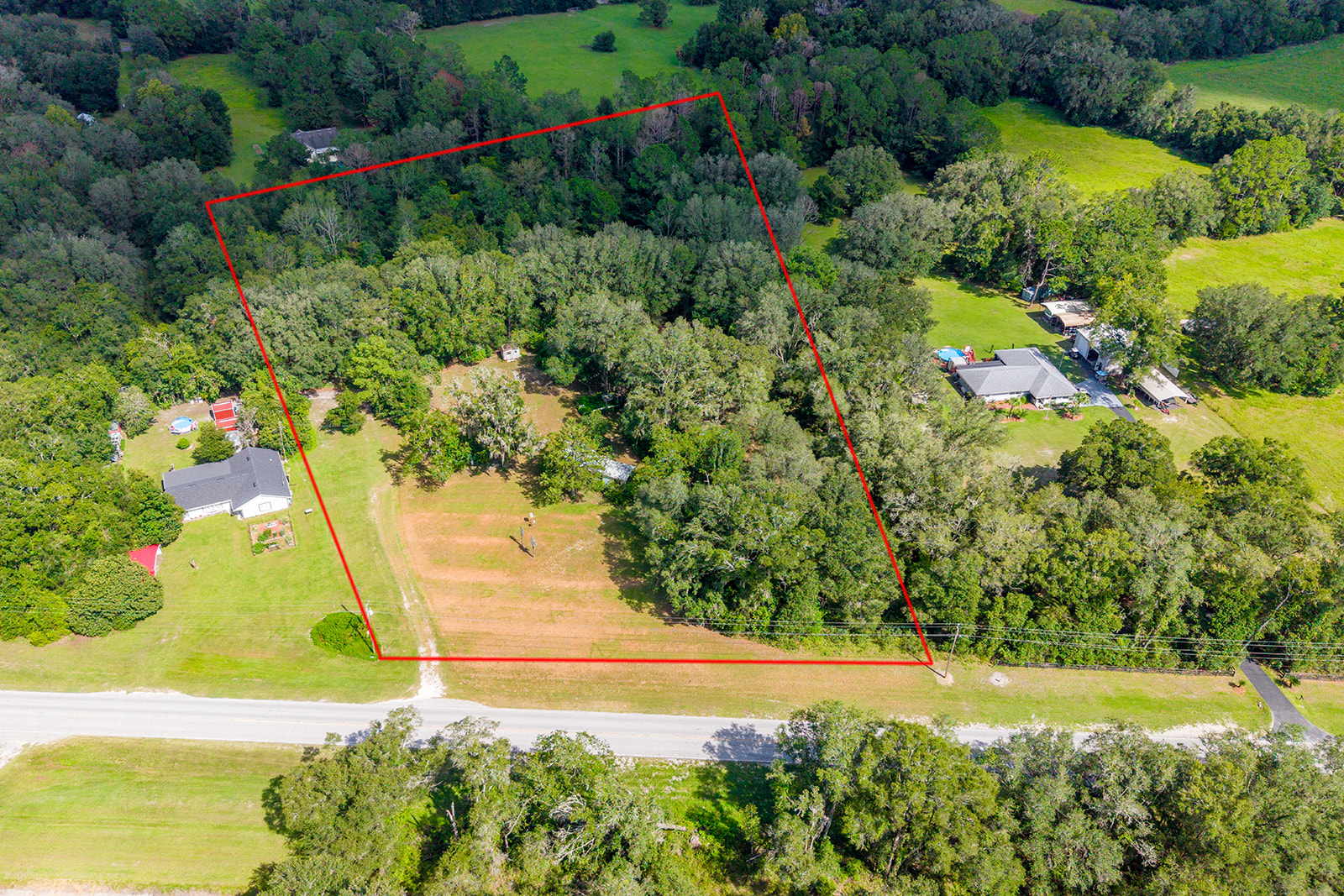
Thinking about buying five acres in Florida? Whether you dream of building a custom home, starting a homestead, creating a private country retreat, or investing in land, five acres can open the door to exciting possibilities. But what are you actually allowed to do with the property?
The answer may surprise you.
Owning five acres in Florida doesn't automatically mean you can build anything you want. What you can legally do depends on the property's zoning, county regulations, deed restrictions, environmental conditions, and available utilities.
In North Florida communities like Keystone Heights, Melrose, Hawthorne, Starke, Alachua, Gainesville, Middleburg, and Green Cove Springs, acreage properties are popular with buyers seeking more space, privacy, and flexibility.
Before purchasing land, it's important to understand what five acres can—and cannot—be used for.
This guide explains the possibilities, restrictions, and important questions to ask before buying acreage in Florida in 2026.
How Big Is 5 Acres of Land?
Five acres is significantly larger than a typical residential lot.
To put it into perspective:
-
5 acres = 217,800 square feet
-
Approximately 3.8 football fields, including end zones.
-
A square five-acre parcel would measure approximately 467 feet on each side.
-
Enough land to potentially accommodate a home, driveway, gardens, recreational areas, and additional improvements.
However, the shape and physical characteristics of a parcel matter just as much as its total acreage.
For example, a long, narrow five-acre property may have different development possibilities than a square parcel of the same size.
And if part of the land contains wetlands, flood-prone areas, easements, or other restrictions, the usable acreage could be significantly smaller.
The most important question isn't simply how much land you own. It's how much of that land you can legally use for your intended purpose.
1. Can You Build a House on 5 Acres in Florida?
Yes, in many cases you can build a house on five acres in Florida, provided the property is zoned for residential use and meets applicable development requirements.
However, acreage alone does not guarantee that a property is buildable.
Before purchasing, buyers should investigate:
-
Zoning designation.
-
Future land-use classification.
-
Minimum lot size.
-
Building setbacks.
-
Legal road access.
-
Wetlands and flood zones.
-
Septic or sewer availability.
-
Water supply.
-
Deed restrictions and HOA rules.
What if the Property Is Zoned Agricultural?
Some agricultural zoning districts permit single-family homes, but requirements vary by jurisdiction.
A property zoned agricultural in Bradford County may have different residential development standards than one in Clay or Alachua County.
Always confirm whether your proposed residence is permitted before buying.
Can You Build More Than One House on 5 Acres?
Possibly.
Some properties may qualify for multiple homesites, accessory dwelling units, or subdivision into smaller parcels.
However, the number of homes allowed depends on density limits, zoning, minimum lot dimensions, access requirements, and other rules.
Five acres does not automatically mean you can build five houses.
2. Can You Put a Manufactured Home on 5 Acres in Florida?
Manufactured homes are a popular option for buyers interested in affordable housing and country living.
But can you place one on your own acreage?
In many areas, yes—but only where permitted by applicable zoning and other restrictions.
Before purchasing land for a manufactured home, verify:
-
Whether manufactured homes are permitted.
-
Minimum home size requirements.
-
Applicable installation standards.
-
Foundation and anchoring requirements.
-
Setbacks.
-
Septic and utility requirements.
-
Deed restrictions.
-
Community or HOA rules.
Some neighborhoods allow only site-built or modular homes.
Others may permit manufactured homes under specific conditions.
Can You Replace an Existing Manufactured Home?
An existing manufactured home doesn't necessarily guarantee that a new one can be installed in the same location.
Rules may have changed since the original home was placed on the property.
Buyers should confirm replacement eligibility with the local building and zoning departments.
Before purchasing acreage for a manufactured home, obtain confirmation that your intended home type is allowed.
3. Can You Build a Barndominium on 5 Acres in Florida?
Barndominiums have become increasingly popular among buyers who want spacious country homes, workshops, and flexible floor plans.
A barndominium may combine traditional living space with a metal-building design or other barn-inspired features.
Are Barndominiums Legal in Florida?
They can be, provided they comply with applicable zoning, building codes, engineering requirements, and permitting standards.
A barndominium intended as a residence must meet the requirements for an approved dwelling.
The fact that a parcel permits agricultural buildings does not necessarily mean an agricultural building can legally be used as a home.
Why Five Acres Can Be Appealing
Depending on the property, five acres may provide room for:
-
A custom barndominium.
-
A detached garage.
-
A workshop.
-
Outdoor recreation.
-
Gardens.
-
Additional storage structures.
Each proposed improvement must meet applicable regulations.
4. Can You Start a Homestead on 5 Acres in Florida?
For many buyers, owning five acres means having more control over their lifestyle.
A small homestead might include:
-
A vegetable garden.
-
Fruit trees.
-
Greenhouses.
-
Composting areas.
-
Rainwater collection systems.
-
Outdoor storage.
-
A workshop.
-
Open space for recreational activities.
Many of these uses may be allowed, but local regulations can apply.
Can You Grow Your Own Food?
Generally, personal gardening is permitted in many residential and agricultural districts.
However, larger-scale commercial activities may be subject to additional requirements.
For example, operating a commercial nursery or farm stand can involve different rules than maintaining a personal vegetable garden.
Does Having 5 Acres Make You Eligible for Florida's Agricultural Tax Classification?
Not automatically.
Florida's agricultural classification, commonly called Greenbelt, is based on qualifying bona fide agricultural use.
Simply owning acreage or having agricultural zoning does not guarantee eligibility.
The county property appraiser evaluates agricultural classification under Florida law.
5. Can You Have a Workshop or Large Garage on 5 Acres?
One of the biggest advantages of buying acreage is having space for additional structures.
Depending on local zoning and permitting requirements, property owners may be able to construct:
-
Detached garages.
-
Workshops.
-
Storage buildings.
-
Equipment sheds.
-
Pole barns.
-
Hobby spaces.
-
Covered parking areas.
Do You Need a Permit for a Workshop?
Often, yes.
Permit requirements depend on the building's size, construction type, location, utilities, and intended use.
Even when a structure qualifies for a permit exemption, zoning setbacks and other regulations may still apply.
Can You Run a Business From Your Property?
Possibly.
Some home-based businesses are allowed under Florida law and local regulations, but activities involving customer traffic, outdoor storage, employees, noise, or commercial operations may be restricted.
Always verify the specific business use before purchasing.
6. Can You Park an RV or Camper on Your Own Land in Florida?
Owning five acres doesn't necessarily mean you can live permanently in an RV.
This is a common misunderstanding among vacant-land buyers.
Can You Store an RV on Your Property?
Many areas permit RV storage, although location, screening, and other requirements may apply.
Can You Live in an RV Full-Time?
Permanent RV occupancy may be restricted or prohibited depending on zoning and local regulations.
Temporary occupancy during construction may also require special approval.
Never assume that owning land gives you the right to use an RV as a permanent residence.
If RV living is part of your plan, verify the rules with the local jurisdiction before purchasing.
7. Can You Divide 5 Acres Into Smaller Lots in Florida?
Possibly, and this can be an important consideration for investors.
For example, a buyer might want to purchase five acres and divide it into two or more residential homesites.
Whether that's possible depends on:
-
Zoning and future land-use density.
-
Minimum parcel sizes.
-
Minimum road frontage.
-
Legal access.
-
Subdivision regulations.
-
Utility requirements.
-
Environmental restrictions.
-
Platting or lot-split approvals.
Can You Split 5 Acres Into Five 1-Acre Lots?
Only if the applicable regulations allow it.
Some zoning districts permit smaller lots, while others require several acres per residence.
Additional roads, drainage systems, or infrastructure may also be required.
Buyers interested in subdivision should consult the county planning department and a qualified surveyor before purchasing.
8. Can You Build a Guest House on 5 Acres?
A guest house or accessory dwelling unit, sometimes called an ADU, may be permitted on certain properties.
These structures can provide additional living space for guests or other permitted residential uses.
However, local rules may govern:
-
Whether an ADU is permitted.
-
Maximum size.
-
Setbacks.
-
Parking.
-
Utility connections.
-
Occupancy.
-
Short-term rental use.
Some jurisdictions distinguish between a guest house without cooking facilities and a separate dwelling unit with a full kitchen.
The distinction can affect permitting.
Do not assume that a large lot automatically allows a second residence.
9. Can You Rent Out Part of Your 5-Acre Property?
Rental possibilities depend on zoning, building approvals, deed restrictions, and the type of activity proposed.
Potential uses buyers sometimes consider include:
-
Renting an approved residential dwelling.
-
Long-term residential leasing.
-
Short-term vacation rentals.
-
Storage or parking arrangements.
-
Leasing land for an authorized use.
Can You Build an Airbnb Cabin on 5 Acres?
Possibly, but not automatically.
A cabin intended for overnight rental must comply with applicable building and land-use requirements.
Short-term rentals may also involve state licensing, local registration, taxes, and other requirements.
A property being located in a rural area does not automatically exempt it from these rules.
10. Can You Clear All 5 Acres of Land in Florida?
Not necessarily.
Some properties contain environmental features that restrict clearing or development.
Before removing trees or altering the land, investigate:
-
Wetlands.
-
Protected vegetation.
-
Floodplains.
-
Conservation easements.
-
Drainage features.
-
Local tree regulations.
-
Environmental permits.
What if the Property Has Wetlands?
Wetlands can significantly affect development plans.
Some activities involving wetlands or changes to surface-water flows may require environmental permits.
A five-acre parcel could have several acres of wetlands and only a small portion suitable for construction.
Can You Fill Wetlands to Build a House?
Not without determining whether the activity is allowed and obtaining any required authorizations.
Unauthorized filling or alteration can create serious regulatory and financial problems.
Always investigate wetlands and environmental restrictions before purchasing vacant land.
11. Can You Build on Land Without City Water or Sewer?
Yes, in many rural areas, homes rely on private wells and septic systems.
However, the property must be suitable for the proposed systems.
Private Well
A well provides water from an underground source.
Well installation may require permits, licensed contractors, and compliance with applicable standards.
Septic System
A septic system treats and disposes of household wastewater on-site.
Approval depends on factors such as:
-
Soil conditions.
-
Available usable area.
-
Property layout.
-
Setbacks.
-
System design.
-
Environmental requirements.
A property may be large enough for a home but still face septic limitations.
What About Electricity?
Buyers should contact the local utility provider to determine whether power is available and what it would cost to establish service.
Electricity running along a nearby road doesn't necessarily mean the connection will be inexpensive.
12. Can You Use 5 Acres for Recreational Activities?
Many buyers purchase acreage simply to enjoy privacy and outdoor recreation.
Depending on local regulations and property conditions, recreational uses may include:
-
Walking trails.
-
Gardening.
-
Outdoor gatherings.
-
Camping.
-
Fishing where lawful access exists.
-
Personal sports and recreation.
-
Nature observation.
However, activities involving permanent structures, land clearing, amplified noise, commercial events, or overnight accommodations may require approvals.
Waterfront property owners should also investigate shoreline restrictions and legal water access.
13. What Does Agricultural Zoning Mean in Florida?
Agricultural zoning generally identifies land intended to accommodate farming and certain related uses.
However, agricultural zoning is not identical throughout Florida.
Each county establishes its own zoning districts and permitted-use standards, subject to applicable state law.
Agricultural Zoning vs. Agricultural Tax Classification
These are two different things.
Agricultural zoning: A land-use designation administered by the local government.
Agricultural tax classification: A property-tax assessment classification determined by the county property appraiser based on qualifying agricultural use.
A parcel can be agriculturally zoned without qualifying for an agricultural tax classification.
Similarly, certain properties with other zoning designations may qualify for agricultural classification based on their actual use.
Always check both separately.
14. What Can You Do With 5 Acres in Different North Florida Counties?
Five-acre properties are available throughout North Florida, but regulations vary by location and zoning district.
Keystone Heights and Clay County
Buyers interested in acreage around Keystone Heights should verify which county and jurisdiction govern the parcel.
Depending on its exact location, a property may fall under different local development regulations.
Melrose, Florida
Melrose-area properties can fall within different counties.
Buyers should verify the parcel's county, zoning, future land-use designation, and any community restrictions.
Hawthorne and Putnam County
Rural acreage may offer opportunities for homes, gardening, workshops, and other uses where permitted.
However, wetlands, access, and septic requirements can affect development.
Starke and Bradford County
Bradford County offers rural and agricultural properties, but building and subdivision eligibility must be evaluated individually.
Alachua and Gainesville
Buyers should investigate the applicable Alachua County or municipal regulations, especially for manufactured homes, accessory structures, and proposed subdivisions.
Middleburg and Green Cove Springs
Clay County acreage buyers should review zoning, access, utilities, flood zones, and deed restrictions before purchasing.
The same five-acre parcel size can support very different uses depending on its location.
15. What Should You Check Before Buying 5 Acres in Florida?
Before making an offer on vacant land, complete these important due-diligence steps.
Step 1: Find the Parcel Identification Number
Use the county property appraiser's website to locate the parcel and review its basic information.
Step 2: Verify Zoning and Future Land Use
Contact the county or municipal planning department to confirm what uses are permitted.
Step 3: Check for Wetlands and Flood Zones
Review available mapping and obtain professional evaluations when appropriate.
Step 4: Confirm Legal Access
Verify road frontage, recorded easements, and the legal right to reach the property.
Step 5: Investigate Utilities
Determine whether water, sewer, electricity, or other services are available.
Step 6: Evaluate Septic Feasibility
If municipal sewer is unavailable, investigate whether the proposed septic system can be approved.
Step 7: Review Deed Restrictions
Even when county zoning permits a use, recorded private restrictions may limit it.
Step 8: Estimate Site Preparation Costs
Consider clearing, grading, driveways, drainage, and utility extensions.
Step 9: Confirm Your Intended Use
Whether you want a custom home, manufactured home, workshop, or subdivided lots, seek confirmation from the appropriate authorities.
Step 10: Work With a Real Estate Professional Familiar With Land
A knowledgeable local real estate agent can help you locate suitable properties, review available information, and identify questions that require confirmation by county officials or qualified specialists.
16. Is Buying 5 Acres in Florida a Good Investment?
Five acres can be appealing to buyers interested in long-term ownership, privacy, recreation, or future development.
However, not every acreage property is a good investment.
Important factors include:
-
Purchase price.
-
Location.
-
Buildability.
-
Zoning.
-
Road access.
-
Utilities.
-
Environmental restrictions.
-
Market demand.
-
Comparable land sales.
-
Holding and development costs.
A lower-priced parcel with significant development limitations may offer less flexibility than a more expensive property with verified buildable land.
The best acreage purchase is one that fits your budget, intended use, and long-term goals.
Frequently Asked Questions About Owning 5 Acres in Florida
Can I build a house on 5 acres in Florida?
In many cases, yes. The property must permit residential construction and meet applicable zoning, access, utility, environmental, and building requirements.
Can I put a mobile home on 5 acres in Florida?
Possibly. Manufactured-home eligibility depends on local zoning, installation requirements, and any applicable deed restrictions.
Can I build a barndominium on agricultural land in Florida?
Some agricultural districts allow residential structures, including qualifying barndominiums. The proposed home must meet applicable codes and permitting requirements.
Can I live in an RV on my own 5 acres in Florida?
Not automatically. Permanent RV occupancy may be prohibited or restricted by local regulations.
Can I split 5 acres into smaller lots?
Possibly. Minimum lot size, density, road frontage, access, and subdivision regulations determine whether division is permitted.
Can I build two houses on 5 acres?
Potentially, depending on zoning, density, accessory dwelling rules, and other development requirements.
Do I need a permit to clear 5 acres in Florida?
Permit requirements depend on the location, vegetation, wetlands, drainage impacts, and the work proposed.
Can I get an agricultural tax exemption on 5 acres?
Florida has an agricultural classification rather than a blanket acreage-based exemption. Qualification generally requires bona fide agricultural use and approval by the county property appraiser.
Is 5 acres enough land for a homestead?
For many buyers, five acres can provide substantial room for a residence, gardens, and other permitted improvements. The property's physical characteristics and legal restrictions determine what is feasible.
Can I build a guest house on my 5 acres?
Possibly. Local accessory dwelling unit regulations and applicable restrictions determine whether a second residential structure is allowed.
Looking for 5 Acres of Land for Sale in North Florida?
Whether you're dreaming of a custom home, a private country retreat, a barndominium, or simply more space, finding the right property starts with understanding its possibilities.
At CB Isaac Realty, we help buyers explore land, acreage, residential homes, waterfront properties, and investment opportunities throughout North Florida.
We serve communities including:
Keystone Heights | Melrose | Hawthorne | Starke | Alachua | Gainesville | Jacksonville | Middleburg | Green Cove Springs | Palatka
Our team can help you search for properties that fit your goals and identify important questions to investigate before buying.
Ready to Find Your Piece of North Florida?
🌳 EXPLORE LAND AND ACREAGE FOR SALE
🏡 BROWSE HOMES FOR SALE IN NORTH FLORIDA
💰 Already own land and wondering what it's worth?
FIND OUT WHAT YOUR PROPERTY MAY BE WORTH
CB Isaac Realty
352-475-2199
www.cbisaacrealty.com
Helping North Florida buyers and sellers make informed real estate decisions.
