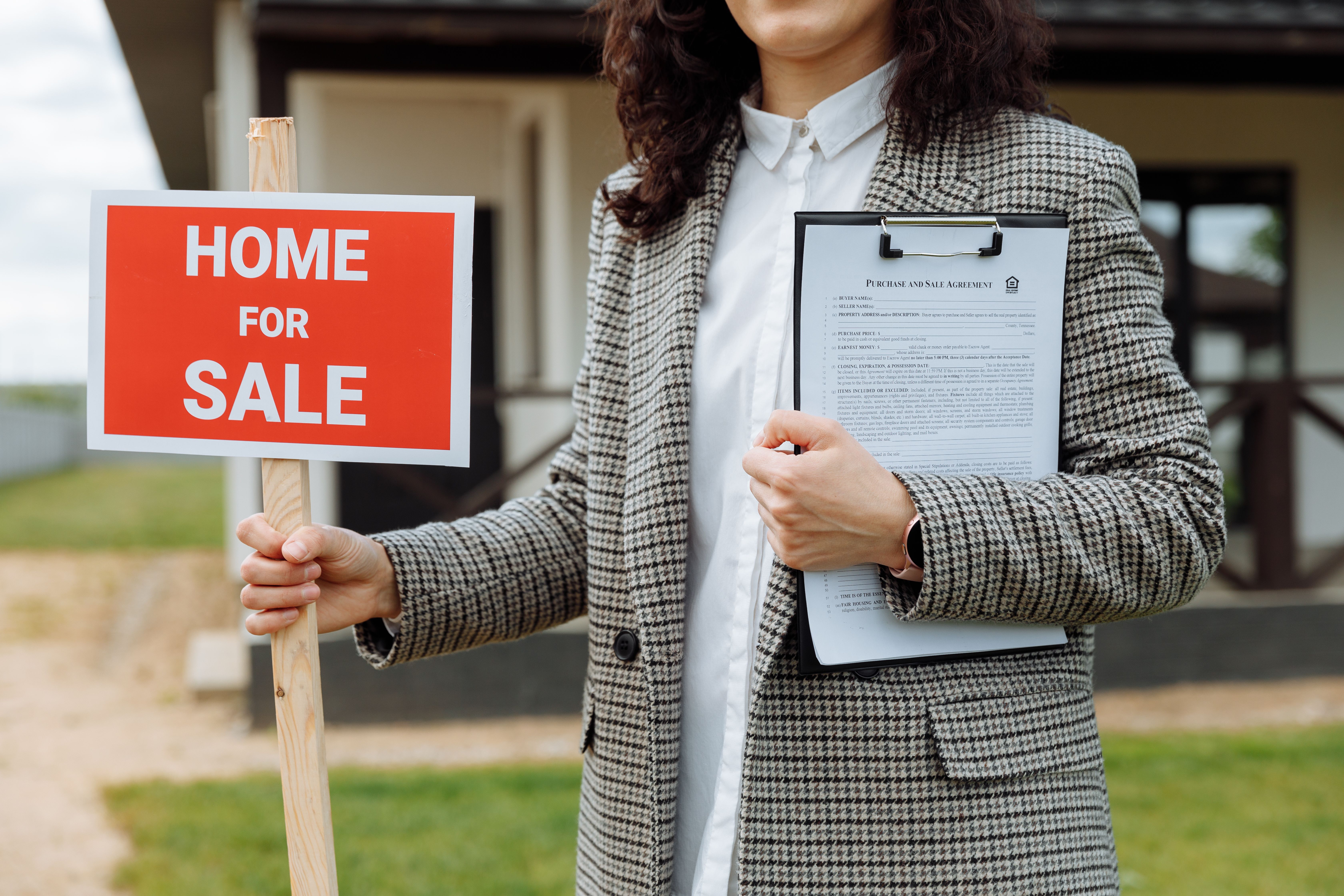
If you've spent any time searching for homes online, you've probably seen a property suddenly change from "Active" to "Under Contract."
But what does under contract actually mean in real estate? Is the home already sold? Can another buyer still make an offer? And what happens between going under contract and closing?
Understanding these terms can make the buying and selling process much easier to navigate.
Whether you're buying or selling a home in North Florida, here's what you should know about what happens when a property goes under contract.
What Does "Under Contract" Mean?
A property is generally considered under contract when a seller has accepted a buyer's offer and both parties have entered into a purchase agreement.
The buyer and seller have agreed to the terms of the transaction, but the sale has not closed yet.
There are usually several steps that still need to happen before ownership officially transfers to the buyer.
Depending on the contract and transaction, these could include:
- Inspections and due diligence
- Financing approval
- Appraisal
- Title work
- Survey or property-related research
- Homeowners insurance
- Final walkthrough
- Closing
Until the transaction successfully closes, the property hasn't officially been sold.
Under Contract Doesn't Always Mean the Deal Is Guaranteed to Close
This is one of the most important things for buyers and sellers to understand.
An accepted offer is a major step, but issues can still arise before closing.
Real estate contracts may contain contingencies or other provisions that allow a buyer or seller certain rights under specific circumstances.
For example, a transaction could encounter problems involving the home's condition, financing, appraisal, title, insurance, or another contract requirement.
Exactly what happens in those situations depends on the purchase agreement.
That's why an under-contract property isn't the same thing as a closed sale.
What Happens After a House Goes Under Contract?
Once the contract is signed, the transaction moves into the next phase.
Here's what buyers and sellers can generally expect.
1. The Buyer Makes the Required Deposit
Depending on the contract, the buyer may be required to provide an earnest money deposit.
Earnest money demonstrates the buyer's intention to proceed with the purchase and is typically held according to the terms of the contract.
The amount, deadline, and conditions involving the deposit can vary.
2. Inspections and Due Diligence Begin
The buyer may have an opportunity to investigate the property during a specified period.
A professional home inspection may evaluate components such as the:
- Roof
- HVAC system
- Electrical system
- Plumbing
- Foundation and structure
- Appliances
- Windows and doors
- Exterior components
North Florida properties may have additional features that buyers want evaluated, including private wells, septic systems, pools, docks, boat lifts, outbuildings, or other improvements.
Buyers purchasing acreage or waterfront property may have additional due-diligence considerations depending on the property.
3. Financing Continues
If the buyer is obtaining a mortgage, the lender continues processing the loan after the property goes under contract.
The lender may review the buyer's finances, employment, credit, assets, insurance, and other documentation.
Buyers should be careful about making significant financial changes while they're under contract. Opening new credit accounts, financing a vehicle, changing jobs, or making large purchases could potentially affect loan approval.
Questions about a particular loan should always be discussed with the buyer's lender.
4. The Property May Be Appraised
For financed purchases, the lender may require an appraisal.
An appraisal provides an independent opinion of the property's value for lending purposes.
If the appraisal comes in at or above the necessary value, the financing process can generally continue.
If it comes in lower than expected, the buyer and seller may need to review their options based on the contract and financing.
What Happens With the Title?
Title work is another important part of the transaction.
The title company or closing professional may research the property's ownership history and identify issues that could affect the transfer.
Potential concerns can include liens, ownership questions, judgments, legal descriptions, easements, or other title matters.
Some properties—particularly acreage, rural land, waterfront property, or properties accessed by private roads—can have additional considerations that buyers should investigate.
What Is the Difference Between Active, Under Contract, Pending, and Sold?
These terms are sometimes used differently depending on the MLS or real estate platform, but here's a general way to understand them.
Active: The property is currently being marketed for sale and does not have an accepted contract reflected by that status.
Under Contract: The seller has accepted an offer, but the transaction hasn't closed.
Pending: An offer has been accepted and the transaction is moving toward closing. Depending on the MLS, "pending" may indicate that certain contingencies have been addressed or that the property is further along in the process.
Sold/Closed: The transaction has closed and ownership has transferred.
Because MLS status definitions can vary, ask your real estate agent what a particular status means for the property you're interested in.
Can You Make an Offer on a House That's Under Contract?
Possibly.
An under-contract property isn't necessarily completely out of reach.
In some situations, a seller may be willing to accept backup offers.
A backup offer generally places another buyer in position to move forward if the existing transaction terminates according to its terms.
Whether backup offers are being considered depends on the seller, listing, contract situation, and applicable rules.
If you find an under-contract home you really like, don't automatically assume there's nothing you can do. Ask your real estate agent to find out whether backup offers are being accepted.
Why Do Homes Come Back on the Market?
Sometimes you'll see a property go under contract and then become active again.
There are many possible reasons.
The buyer's financing may not have worked out. An inspection may have revealed concerns. The parties may not have reached an agreement following due diligence. There could have been an appraisal, title, insurance, or other contractual issue.
A property returning to active status doesn't automatically mean something is wrong with the house.
If you're interested in a home that has come back on the market, your real estate agent can help you determine what information may be available and what questions you should ask.
What Does Under Contract Mean for the Seller?
For sellers, going under contract means you've reached an important milestone—but there is still work to do.
You'll generally need to continue meeting your responsibilities under the purchase agreement while the buyer completes their side of the transaction.
Depending on the contract, that could include providing access for inspections or appraisal, completing agreed-upon items, maintaining the property, providing documents, and preparing for closing.
Sellers should also avoid assuming the sale is complete until the transaction has actually closed.
What Does Under Contract Mean for the Buyer?
For buyers, having an offer accepted is exciting, but it's also when much of the important work begins.
Pay close attention to deadlines.
Real estate contracts can contain important dates involving deposits, inspections, financing, appraisal, document review, and closing.
Stay in communication with your real estate agent, lender, insurance provider, and other professionals involved in your transaction.
This is also generally not the time to make major financial changes without speaking with your lender first.
How Long Does a House Stay Under Contract?
There isn't one standard timeline.
The time between an accepted offer and closing depends on the purchase agreement, financing, inspections, appraisal, title work, insurance, and the individual circumstances of the transaction.
A cash transaction may have a different timeline than a financed purchase.
If you're selling your home and have a specific deadline, discuss it with your real estate agent before accepting an offer. The proposed closing date and other contract terms can be important when evaluating offers.
Should You Keep Looking at Homes After Making an Offer?
Until you have an accepted contract, continuing your search can make sense.
Once you're under contract, your next steps depend on your purchase agreement and circumstances.
However, buyers should remember that another home going under contract doesn't necessarily mean it's gone forever.
Listings can return to the market, and some sellers may consider backup offers.
A real estate agent can also help identify similar properties if the home you wanted is no longer available.
The Bottom Line
Under contract means the seller has accepted an offer and the buyer and seller have entered into a purchase agreement—but the transaction hasn't closed yet.
Inspections, financing, appraisal, title work, insurance, due diligence, and other steps may still need to be completed.
For buyers, it's the beginning of an important stage of the home-buying process.
For sellers, it's an exciting milestone, but the property isn't officially sold until the transaction closes.
Understanding the difference between active, under contract, pending, and sold can help you make better decisions as you navigate the real estate market.
Buying or Selling in North Florida?
Whether you're searching for your next home or preparing to sell, CB Isaac Realty can help you navigate the process from the initial search or listing through closing.
We work with buyers and sellers throughout Melrose, Keystone Heights, Hawthorne, Starke, Gainesville, Jacksonville, and communities across North Florida.
Looking for a property?
Search North Florida Homes, Land & Waterfront Properties
Thinking about selling and wondering what your property may be worth?
Get Your North Florida Property Valuation
CB Isaac Realty™ | 352-475-2199
.png)